
NHS Coped During Covid But Only Just Inquiry Chairwoman
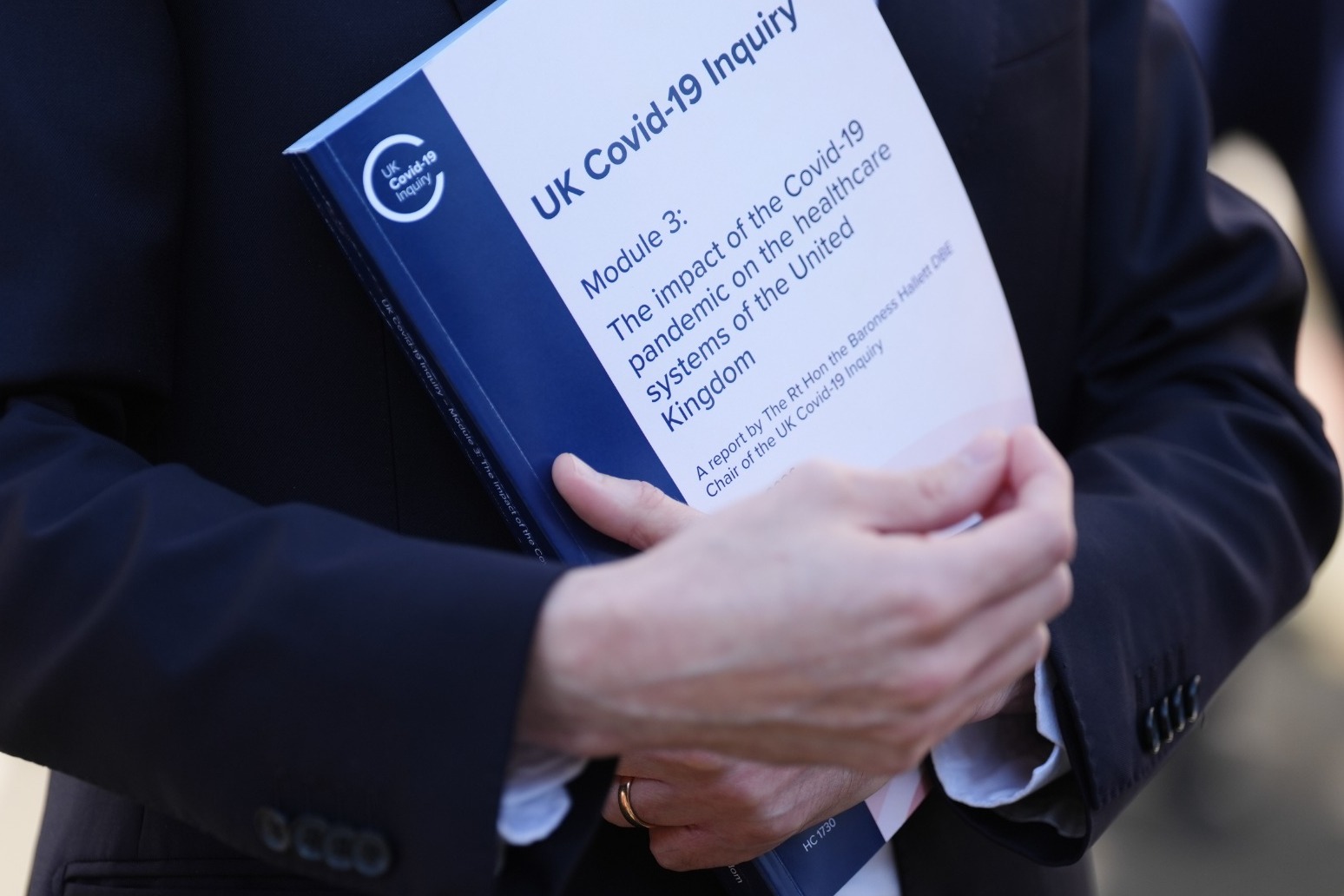
The NHS “coped, but only just” during the Covid-19 pandemic, the inquiry into the crisis has concluded.
Baroness Heather Hallett, chairwoman of the UK Covid-19 Inquiry, said collapse was “narrowly avoided” thanks to the efforts of NHS staff. Publishing her report into how the NHS coped across the four nations, Lady Hallett said in a statement: “I can summarise that impact as: we coped, but only just. “The healthcare systems came close to collapse. “Healthcare workers carried the burden of caring for the sick and dying in unprecedented numbers. “It came at a huge cost to them, to their families, to their patients and to the loved ones of patients. “It also came at a huge cost to the non-Covid patients who were not seen and treated. “Collapse was only narrowly avoided thanks to the extraordinary efforts of all those working in healthcare across the UK.” She went on: “However, despite those efforts, some patients did not get the level of care they would usually receive. “Some people were not admitted to hospital when they should have been. “Those taken to hospital in an ambulance often waited hours to be admitted, putting them and the ambulance crews at risk. “Healthcare staff had to be redeployed to the front line, leaving other aspects of care at risk, staff-to-patient ratios were diluted, the supply of medical equipment was a significant concern, and some patients were not admitted to intensive care units despite their serious condition. “The message to ‘Stay Home, Protect the NHS, Save Lives’ was designed, in part, to protect the UK’s healthcare systems from being overwhelmed. “However, when the pandemic arrived, our healthcare systems were already overstretched and understaffed. This fragility had profound consequences when the numbers of people seeking treatment for Covid-19 started to increase dramatically. “In order to ‘protect’ the healthcare systems, extraordinary steps were taken to free up bed capacity and to ensure there were sufficient numbers of healthcare workers.” These included: discharging patients who were medically fit more quickly – including people to care homes; the suspension of non-urgent care, with millions of operations cancelled; pausing of some cancer screening programmes in some countries. Lady Hallett added: “Desperate measures had to be taken to ensure people who needed treatment for Covid-19 could be cared for and that healthcare systems did not collapse entirely.” Commenting on the publication of the report, director of policy of the NHS Confederation and NHS Providers Dr Layla McCay said: “The report notes that the extraordinary efforts of NHS staff meant the system ‘coped but only just’, despite unprecedented pressures and harrowing frontline conditions. “The profound impact on staff, patients and families must not be overlooked, including people who experienced severe distress due to visiting restrictions and delays to their treatment. “While the NHS is making progress in reducing the backlog and applying lessons from the pandemic, we urge the Government to act swiftly on the inquiry’s recommendations, especially as many of the challenges facing the NHS in 2019 still persist today, and some are even more severe. “It is vital that these lessons translate into meaningful action, strengthened preparedness and a more resilient health and care system for the future.” The NHS waiting list in England hit a record high in September 2023, with 7.77 million treatments waiting to be carried out for 6.5 million patients. The latest data show the waiting list has fallen for the third month in a row, with an estimated 7.25 million treatments waiting to be carried out at the end of January, relating to 6.13 million patients.
Published: by Radio NewsHub