
Minister Hails Hugely Important Moment As UK Marks 25 Years Of Offshore Wind
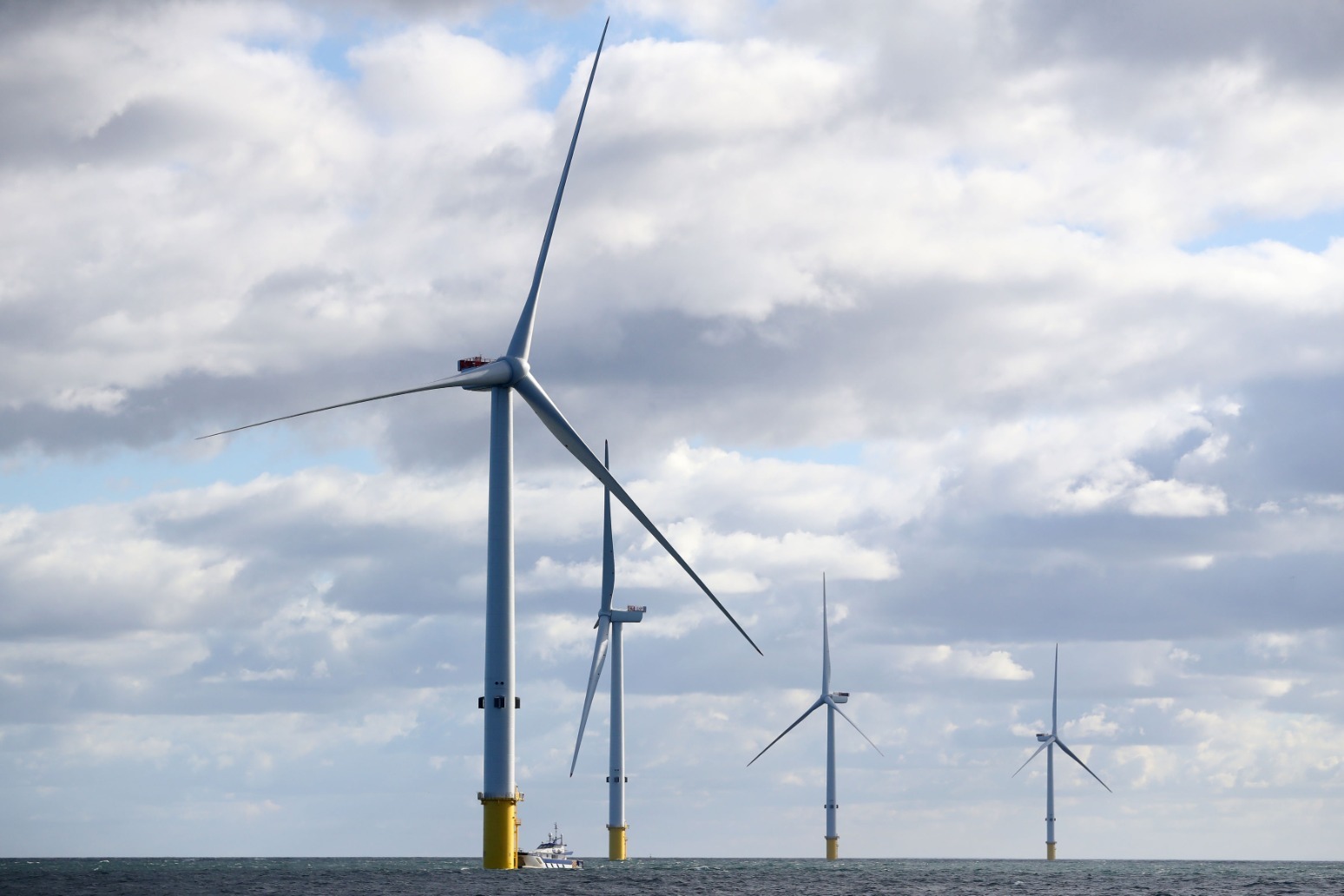
A minister has hailed offshore wind as the “backbone” of the country’s clean energy system as the sector marks 25 years since the UK’s first turbines were erected off the coast of Northumberland.
Since the Blyth site opened in December 2000, offshore wind has grown to become the second largest power source in the country after gas.
Britain’s 47 operational offshore wind farms now supply nearly a fifth (17%) of its electricity generation, with the sector employing around 40,000 people, according to an analysis released on Monday by green group Ember.
To celebrate the milestone, energy minister Michael Shanks visited Blyth last week, where he toured facilities owned by Venterra Group, a company that supplies key services and infrastructure to offshore wind.
Speaking to the Press Association, Mr Shanks said switching on the first turbines at Blyth a quarter of a century ago marked a “hugely important moment”, putting the UK at the forefront of offshore energy.
“I don’t think anyone could’ve fully appreciated the critical role that offshore wind would play in the future,” he said.
“It’s the absolute backbone of the clean power system we want to build.”
During the visit, Mr Shanks spoke to industry leaders, engineers and graduates about the local expertise, technologies and services that companies such as Venterra deliver, as well as the investment needed to scale UK supply chain capacity.
Mr Shanks said: “We’ve got a huge amount of skill and talent in this country that we can now put to use delivering for our energy security.
“It’s also a really exciting economic opportunity for communities like this that – let’s be honest – for far too long felt the pain of deindustrialisation and job losses, and I can now see a real future in these cutting-edge jobs.”
His comments came as Labour pushes ahead with efforts to accelerate the energy transition and hit its target to remove almost all fossil fuels from the UK’s electricity supply by 2030.
Last month, the grid operator said a new wind record was set for Britain, with enough electricity generated from turbines to power 22 million homes.
To stay on track to meet the 2030 goal, the Government needs to secure 8.4 GW of new offshore wind capacity at the upcoming renewable electricity auction round for new projects, known as AR7.
The process sees developers bid to secure a fixed price they can charge for each megawatt hour (MWh) of power they generate, and ministers have offered an initial cash pot of £1.08 billion annually to support projects in this round.
The Government will select the lowest fixed price bid and announce the results in January.
However, industry experts have estimated that the opening budget may only be enough to secure around 5 to 6 GW of capacity.
Asked if he can guarantee AR7 will commission enough offshore wind to support the goal, Mr Shanks said: “The auction is under way at the moment and we’ll have… the outcomes of that soon so I’m not going to speculate about that.
“What I will say is that it was the biggest opening budget of an offshore wind auction in our history.”
Mr Shanks said the cash pot goes “hand-in-hand” with other measures the Government is taking to reach clean power by 2030, such as planning reforms, cutting red tape and giving the sector confidence to invest in the UK.
But he also argued it is part of the Government’s commitment to bring down the cost of electricity bills and the cost of living.
“So it was right and proper that we went into that process with a budget that matches our ambitions but also recognising that we need bids that bring down the cost of electricity,” he said.
On whether Labour will achieve the 2030 goal, Mr Shanks said: “Yes, full stop.
“Every step we get closer, I have more confidence that we will achieve it because what it has helped unlock is a momentum in the industry to do things that we thought in this country were not possible – to build big things and to do it faster.
“But what also gives me confidence is that every single project that will help us achieve clean power by 2030 is already somewhere in the system.”
In 2000, the Blyth wind farm was considered world-leading and capable of powering around 3,000 homes.
Turbines can now be installed in greater numbers, at taller heights and in deeper waters, and the technology is far more powerful.
A single turbine from the recently completed Moray West offshore wind farm can generate more than three times the power output of the entire Blyth offshore wind farm, according to Ember.
Frankie Mayo, an analyst at the green group, said: “The engineering and innovation in British offshore wind over the last 25 years should be a real point of pride.
“With seabeds and wind speeds second-to-none for this kind of technology, Britain has truly led the world in showing its potential.”
Ed Daniels, chief executive of Venterra Group, said: “To unlock the next wave of UK projects and strengthen energy security, we need continued, targeted investment to scale these capabilities, building on our engineering heritage in regional clusters and creating skilled jobs across coastal communities.”
Juergen Maier, chairman of Great British Energy, said: “The next 25 years will define Britain’s energy future.
“By harnessing innovation, investing in people, and building resilient supply chains, we can unlock the full potential of offshore wind and emerging technologies.”
Published: by Radio NewsHub